
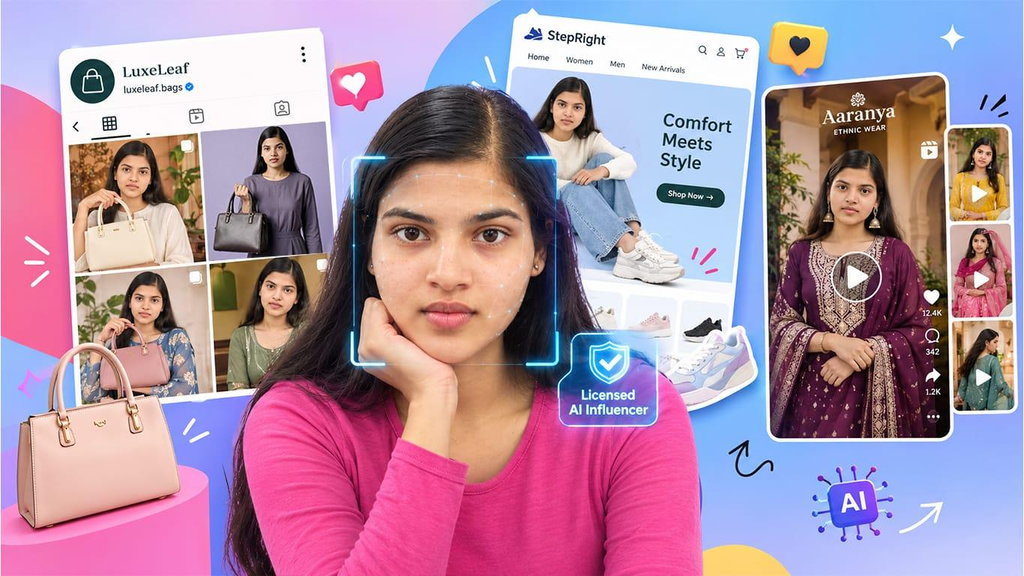
Influencer marketing has traditionally depended on real people building audiences around their personalities, interests, and experiences. That model is now expanding as brands experiment with digital personas that can be designed, managed, and adapted for specific campaigns. AI generated influencers are fictional or digitally created personas presented as creators, often with their own style, interests, and social media accounts.
Unlike a conventional creator, a digital persona does not need to work around travel schedules, availability, or physical production constraints. Brands can develop their appearance, content style, and campaign role according to their objectives. This flexibility is one reason the format is attracting attention across fashion, beauty, entertainment, technology, and lifestyle marketing.
How do AI influencers work?
There are multiple ways to create an AI influencer, such as through generative AI, image and video tools, language models, and human creative direction. Teams can build an avatar, develop its personality, write social media posts, create short videos, and develop campaign ideas around the character.
But the technology does not imply that all aspects of the process are automated. Human involvement remains essential for creating the character, reviewing output, maintaining brand consistency, and preventing misleading claims. The best digital avatars are generally considered creative properties, not just a set of created images.
Why are brands investing in virtual influencers?
There are several practical reasons behind growing interest.
· Consistency: A digital character can have a consistent look, tone, and voice throughout campaigns, helping to establish a recognisable identity.
· Flexibility: Brands can try different locations, outfits, stories, and campaigns without booking a traditional shoot for each one.
· Scalability: Teams can develop several content formats for various channels and markets after defining a character and a production workflow.
· Brand alignment: A character can be created to represent the brand’s values and communication rules. This allows marketing teams to have more control over how the character is communicated.
· Experimentation: Digital personas let brands try new ideas that might be hard, costly, or impossible to create with traditional talent.
Where does AI influencer marketing fit in?
It isn’t just about creating an appealing character. Brands still need a clear purpose for creating and using the persona. For example, a fashion brand could create a digital character for product storytelling, while a gaming company could develop one as part of its entertainment ecosystem. A persona could also support social content, audience engagement, or experimental campaign formats for a consumer brand.
Audience response is also important. Audiences may become sceptical if a brand presents fictional or AI-generated content as though it reflects a real person’s experience. if a brand presents fictional or AI-generated content as though it reflects a real person’s experience. This transparency is important, especially in the case of commercial relationships or endorsements.
What should brands consider before investing?
The first question should be: “For what purpose?” The creation of a digital persona should be based on a specific marketing goal, rather than simply because artificial intelligence makes it possible.
Brands should also establish guidelines covering identity, content approval, disclosure, IP, and commercial use. Consent and usage rights become particularly important when a campaign features the likeness of a real person or a licensed digital representation.
Authenticity is another factor to consider. While AI virtual influencers can provide more creative freedom, viewers are still looking for content that resonates and is believable. So human creative teams are still vital for strategy, storytelling, community understanding, and quality control.
The role of creative talent
AI generated personas are not replacing human creativity. Creating and managing these digital characters still depends on writers, designers, photographers, video creators, strategists, and performers.
Brands can discover creative professionals and licensed AI talent for campaigns that require a combination of traditional creative skills and AI enabled production from Talentrack. This gives brands another way to discover relevant talent while experimenting with new content formats.
The Future of Digital Influencers
AI generated influencers are likely to become another option within the wider creator economy rather than a replacement for human creators. Their value will depend on how well they serve a brand’s audience, story, and objectives.
For brands, the opportunity is not simply to create a digital face. It is to build a credible, distinctive, and responsibly managed character that can contribute something meaningful to the campaign.