
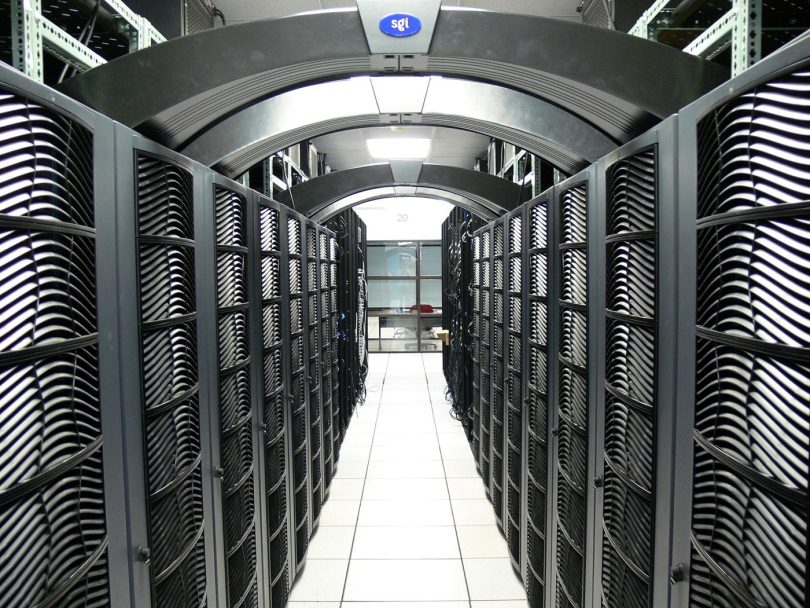

Google has unveiled two new versions of its in-house artificial intelligence chips, widening its challenge to Nvidia in the fast-growing market for AI hardware. The company announced the TPU 8tx and TPU 8i Max on 9 November 2026, as part of its eighth generation of tensor processing units, which first appeared in April. The 8tx, designed with AMD, is built for confidential training and running of AI models, keeping sensitive data protected while it is processed, which matters to government agencies and companies in regulated industries. The 8i Max combines two inference-focused 8i chips in a single package, doubling memory capacity, processing power and bandwidth for applications that handle very large amounts of information at once.
What the Evidence Shows
Google’s chips have mostly been used inside the company for products such as Search, YouTube and Gemini, but the company has been making them available through its cloud business to attract enterprise customers. The new variants broaden that offer to more specialised uses, from confidential computing to very large workloads. The timing matters because demand for AI computing keeps rising faster than supply, and cloud customers want alternatives to Nvidia’s dominant hardware. Google has not published prices for the new chips, and the figures it did share for the 8i Max are relative to the earlier 8i rather than absolute. Even so, the launch shows how determined the biggest cloud companies are to control the silicon their AI runs on. Reporting and analysis from sources such as IEEE Spectrum track the same developments, and specialists following Google’s new TPU 8tx and 8i Max chips say the direction is now consistent across independent lines of evidence.
The Wider Context
Adoption of Google’s new TPU 8tx and 8i Max chips follows a familiar pattern with an unfamiliar speed. Early users tolerate rough edges in exchange for advantage, mainstream users arrive when the tool disappears into existing workflows, and the market consolidates around whoever made that transition feel effortless. Vendors are racing less on raw performance now than on integration, support and trust.
What Happens Next
The realistic forecast for Google’s new TPU 8tx and 8i Max chips is steady integration rather than sudden replacement: embedded in products people already use, improving in increments, and regulated in proportion to its reach. The companies and institutions that plan on that basis, training staff and redesigning processes instead of chasing launches, are the ones the adoption data tends to vindicate. You can follow related developments in our coverage of technology.
It is also worth remembering how quickly the picture in this area has changed before. Positions that looked settled a few years ago have been revised as new data arrived, and the same humility is appropriate now. The strongest coverage of this subject, and the most useful advice, tends to come from sources that update their views openly when the facts move, rather than defending an earlier position long after it has stopped fitting the evidence available.