
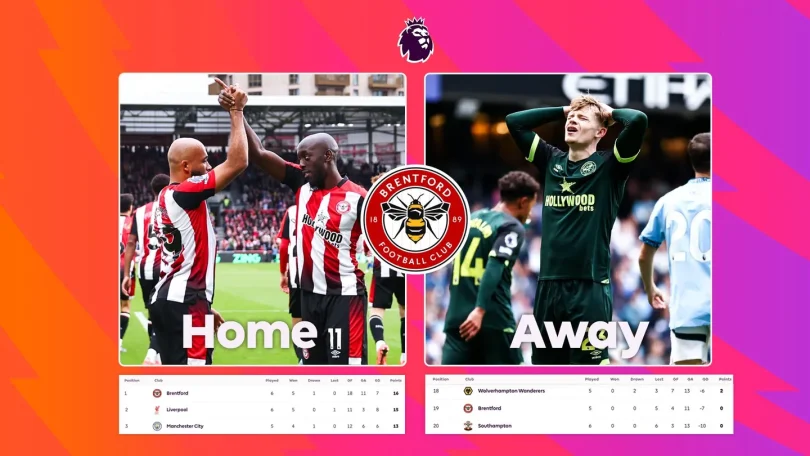

Talking about Premier League teams that “win the price at home” really means identifying clubs that outperform what closing odds imply when playing in their own stadium. In practice, those sides either win or avoid defeat more often than their home prices suggest, or cover handicap lines at an above‑average rate. Because markets are efficient on big clubs, these patterns typically emerge in strong mid-table or newly improved sides whose home performance has climbed faster than public perception.
Why Beating the Home Price Is More Than Just Having a Good Home Record
A strong home points record does not automatically translate to beating the market. Dominant clubs like Manchester City or Liverpool often face very short home odds and heavy handicaps; they may win frequently but still “fail” against the spread when victories are narrower than lines assume. Market-beating teams instead are those whose home performance is better than expected at the prices offered—winning as small favourites, avoiding defeat as slight underdogs, or covering Asian handicaps more often than a fair model would project.
1X2 and handicap data for recent seasons show that home-dog and small‑favourite categories are where mispricings most often occur, because public money tends to overvalue traditional giants and undervalue less glamorous sides, especially when those smaller teams quietly improve tactical structure or recruitment. Over time, that gap between perceived and actual home level is what produces outsized “price wins,” not just raw wins and draws.
How Home-Edge Overperformance Shows Up in Real Data
Home/away splits give the first structural clue. SoccerStats and FootyStats’ 2025/26 home tables highlight clubs like Liverpool, Arsenal, Chelsea and Brighton as early-season home overachievers in points and goal difference, while Sunderland, Burnley and Bournemouth also show perfect or near‑perfect starts at home despite more modest overall expectations. When such sides open the campaign with multiple home wins or low xG against in their stadiums, but markets still price them cautiously based on previous seasons, they are more likely to beat early home lines.
Historical work on betting patterns underscores this. A widely discussed analysis on r/SoccerBetting showed that systematically opposing home favourites in one Premier League season would have produced significant profit, largely due to underdogs (including visitors to historically strong home grounds) being underpriced. The same logic applies in reverse for certain home teams: if the market continues to shade prices toward name‑value away opponents, locally strong but underrated hosts can keep “winning the price” before odds catch up.
Table: Typical Profiles of Teams That Beat Home Prices vs Those That Do Not
Because no single public table lists “ATS leaders,” the best practical approach is to compare common characteristics of overperforming home sides with those that struggle relative to expectations.
| Profile type | Home results pattern | Market context and price behaviour | Likely relationship to “winning the price” at home |
| Emerging mid-table overachiever | Strong home points, few goals conceded | Still priced modestly vs big-six visitors and reputational peers | High potential to cover or upset at home before odds fully adjust |
| Traditional giant with short odds | Very high win rate but many narrow scorelines | Regularly faces heavy home handicaps and extremely short 1X2 prices | Mixed ATS record; wins do not always exceed expectations |
| Newly promoted with intense crowd | Patchy overall but competitive in home fixtures | Early season markets uncertain, often priced as clear underdogs at home | Can generate early home value through effort and crowd-driven edge |
| Regressing big club | Historically strong at home, current form weaker | Prices remain anchored to past dominance longer than they should | More likely to disappoint handicaps and lose as short home favourites |
Teams in the first and third categories are typically the ones that “win the price” most at home in a given season, because bookmakers and bettors need time to recalibrate from prior assumptions to new realities on the ground.
Mechanisms: Why Some Clubs Consistently Overperform Home Expectations
Several mechanisms underlie repeated home outperformance against the line. Tactical fit is one: some clubs use their home pitch and crowd to play more aggressive, front‑foot football—pressing higher, committing more players forward and accepting greater risk—while reverting to caution away. When markets price them using blended season averages, they may undervalue how much stronger the team becomes at home.
Another mechanism is recruitment tailored to home conditions. Clubs with smaller pitches, intense atmospheres or particular surface traits sometimes build squads whose strengths—set‑piece dominance, aerial power, pressing stamina—are especially effective in that environment. Opponents who are technically superior may still struggle to impose their game, leading to more draws or home wins than pre‑match odds imply. Finally, psychological and logistical factors—travel, weather, and crowd hostility—tend to hurt visiting sides more than raw models capture, magnifying the advantage of clubs that sustain high energy and concentration over full home schedules.
Conditional Scenarios When Home Price Winning Spikes or Fades
Home price overperformance often clusters in certain stretches of the season. Early months are fertile ground: ratings built on last year’s table may lag behind reality when a club has improved through a new manager or signings. In those windows, home markets move slower than underlying performance, allowing a run of covers or unexpected wins.
Conversely, once a team’s home record and form become obvious—long unbeaten spells, big wins over top opponents—the market tends to adjust aggressively. Handicaps widen, and prices on favourites shorten to the point where “winning the price” demands not just victory but larger margins. At that stage, the same home strength may still exist, but its betting value declines as odds catch up. Injury crises, fixture congestion and managerial changes can also abruptly end a profitable home run against the spread, even if headline results look similar for a while.
UFABET, Market Comparison, and Using Home Performance as One Input
During practical preparation on a football betting website or broader betting environment that lists Premier League markets, including destinations similar to ufabet เข้าสู่ระบบ, home “price winners” should be treated as a starting flag, not a stand‑alone signal. In a market comparison perspective, users can first identify which clubs have strong home metrics—points per game, goal difference, xG balance—and then compare how different bookmakers price their home fixtures relative to league averages and to each other. If one betting platform offers consistently longer home prices on a side that has quietly dominated at home (for example, a mid‑table team with a 2.3+ home PPG and strong xG margins), that discrepancy deserves scrutiny. The next step is to cross-check current form, injuries and schedule to ensure that the historical home edge still holds; only when both performance and price alignment look favourable does “home price winning” turn from a descriptive label into a rational basis for selection.
List: Practical Techniques for Identifying Premier League Teams That Often Beat the Home Line
To move beyond vague impressions of “strong at home,” a set of practical techniques can turn performance data into structured risk–reward judgement. Each technique links observable patterns to likely overperformance against market expectations.
- Compare home points per game and xG with pre-season expectations: focus on clubs whose home PPG and xG difference are significantly better than projected; early in the season, those sides are often still priced like mid-table or lower teams despite playing at near top‑six home levels.
- Check home goal difference and clean-sheet rates: teams with consistently positive home goal differences and frequent home clean sheets, especially against strong opponents, are more likely to outperform handicaps set as if they were average hosts.
- Track closing-line movement vs results: use historical odds data to see whether a club has repeatedly covered initial or closing lines at home; repeated instances of winning by larger margins than the handicap implies hint at a persistent home edge mispriced by the market.
- Examine stylistic and situational edges at home: identify whether the team changes style in its stadium (more pressing, faster tempo, more set‑piece volume) and whether crowd and travel factors often favour it against specific kinds of opponents; such edges can sustain home outperformance longer than pure talent suggests.
Applied together across several months, these techniques help filter genuine home line beaters from teams that just happen to be on short‑term winning streaks.
Summary
Analysing which Premier League teams “win the price” most often at home is ultimately about comparing home performance against realistic pre‑match expectations, not just counting wins. Clubs that quietly outgrow their reputations—emerging mid-table sides with strong home xG and points, or newly promoted teams with intense home atmospheres—tend to offer the best chances of beating the line before markets fully adjust, while traditional giants face short odds and handicaps that make repeated ATS success harder despite strong home records.
By combining home PPG, goal differences, xG margins, closing-line history and stylistic advantages in their own stadiums, observers can identify which teams owe their home success to sustainable structural edges rather than temporary variance. That distinction turns the idea of “most often beating the home price” from a loose betting cliché into a disciplined, data-aware framework for evaluating where home advantage is genuinely under- or overvalued in Premier League markets.