
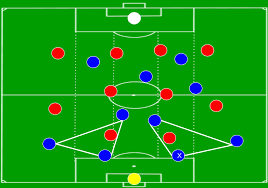

Wide buildup has become one of the clearest fingerprints of how Premier League teams choose to attack, shaping crossing volume, chance quality and how opponents defend space. Analysing those wing patterns across the league reveals not only stylistic differences but also why some clubs extract far more value from their flank play than others.
Why wing-based buildup is a meaningful lens in the modern Premier League
The Premier League’s pace and athleticism encourage teams to attack the outside channels, where one‑v‑one duels and overlaps can unbalance compact blocks. As pressing schemes have intensified and central zones become more congested, many coaches have shifted their buildup emphasis toward flanks, using full‑backs and wingers to progress play before cutting back into central finishing areas.
This wing focus is visible in crossing and chance‑creation data. The league has seen increasing numbers of inswinging deliveries from wide areas—both from open play and corners—with many sides using these patterns not merely for hopeful balls but as rehearsed sequences to isolate aerial targets and late‑arriving midfield runners.
How to define wing-play buildup beyond simple crossing counts
Wing‑based buildup is not just about how often a team crosses; it is about how early and how deliberately they funnel possession toward the flanks. In several 2024–25 analyses of open‑play buildup, teams display distinct “pass maps” where full‑backs and wingers repeatedly trade passes in the wide zones before the ball is driven into the box.
Crossing accuracy and open‑play chance‑creation stats help separate productive wing play from shallow patterns. For example, Premier League statistics note that players like Hugo Bueno and Pedro Porro rank highly for successful open‑play crosses, while wide attackers such as Jack Grealish and Jeremy Doku lead the league for chances created from open play, signalling flank sequences that genuinely end in shots rather than just territory.
Which Premier League teams lean most on wide buildup?
Team crossing tables show that sides like Fulham, Bournemouth, Brighton and Everton rank among the leaders for accurate crosses per match, revealing a systematic preference for wide delivery. Fulham, for instance, sit near the top of the list in accurate crosses while maintaining a mid‑table goals total, illustrating a direct link between flank usage and final‑third volume.
At the player level, specialists such as Pedro Porro, who completed 62 crosses in the 2024–25 season, embody Tottenham’s enduring reliance on right‑side width and overlapping full‑back runs. Correspondingly, Premier League stat features highlight Hugo Bueno’s 46.4% success rate on open‑play crosses, underlining how some teams have shifted from scatter‑gun crossing to more selective, higher‑quality deliveries.
Mechanism: how wide patterns turn into chances
Effective wing buildup usually follows a recurring mechanism involving rotation and timing. Full‑backs overlap or underlap to draw defenders out of position, while wingers either stay wide to stretch the back line or step inside into half‑spaces, creating pockets for through‑passes or cutbacks.
The most dangerous patterns often end not in lofted crosses, but in low, driven cutbacks pulled back from the by‑line into the edge of the six‑yard box or penalty spot. Because these passes arrive from the side rather than from deep, they frequently find late runners unmarked, generating high‑xG shots that explain why teams with organised wing play can sustain strong scoring records over a season.
Comparing wing-play emphasis among leading clubs
Different Premier League contenders distribute their attacking volume across the pitch in distinctive ways, and wing usage is a key part of that identity. Liverpool, with 86 goals in the 2024–25 campaign, blend central combinations with strong flank threats from players like Mohamed Salah and Cody Gakpo, both high on open‑play chance‑creation lists.
Arsenal’s attack, meanwhile, leans on Bukayo Saka as the primary wide chance‑creator, the only Arsenal player in the top 20 for open‑play chances created, according to league analysis. Manchester City and Brighton continue to use winger‑playmaker hybrids such as Doku, whose dribbling and wide progression underpin large shares of their entries into the final third.
| Club | Wing-play feature | Data-backed indication |
| Liverpool | Dual‑sided wide creators (Salah, Gakpo). | High open‑play chances created from flanks. |
| Arsenal | Right‑flank focus via Saka. | Saka as sole top‑20 open‑play creator for the club. |
| Man City | Wide dribblers (Doku) as progressors. | Among league leaders in open‑play chances and vertical threat. |
| Spurs | Full‑back cross volume (Porro). | One of the top crossers in the league from right‑back. |
For pre‑match reading, these differences steer expectations about where each team will try to break the opposition: through wide overloads, central combinations or hybrid patterns that shift emphasis depending on the opponent’s shape.
Where wing-focused buildup strengthens or weakens a team’s attack
Wing‑heavy attacks can be devastating against narrow or deeply set defences that protect the centre but concede space in wide areas. In those matches, full‑backs and wingers enjoy repeated one‑v‑ones, and crossing lanes open up, increasing both cross volume and eventual scoring chances.
However, reliance on flank play can backfire against teams that defend well in the channels or dominate aerial duels. If a side lacks tall, strong targets or struggles to generate cutbacks, high numbers of wide deliveries may produce only low‑xG headers, inflating shot counts without significantly boosting scoring odds. This is why crossing accuracy and the type of final pass matter as much as raw volume when evaluating how dangerous wing‑based buildup really is.
Interpreting wing patterns through a pre-match analysis perspective
Choosing a pre‑match analysis perspective means using wing‑play tendencies as a structural input into how a fixture is likely to unfold. Before kick‑off, analysts can map which side is more likely to drive play down the flanks and whether the opponent’s full‑back and wide‑midfield pairings are equipped to cope with repeated overloads and crosses.
Key questions include whether the attacking team has a high‑volume crosser or creator on either flank, if central forwards are strong aerially, and how the opponent defends wide areas and the back post. The answers influence expectations not just of goal totals, but also of patterns such as where shots originate, potential assist providers, and how often the defending side may be pinned back by wide pressure.
Applying wing-based insights when using UFABET
When analysts have identified that a particular Premier League matchup is likely to hinge on wing patterns—say, a crossing‑heavy side against full‑backs weak in the air—the remaining question is how best to act on that view. If a bettor is using a เว็บยูฟ่า168 sports betting service to place pre‑match stakes, the practical issue becomes whether available markets extend beyond simple match odds and standard totals into options that reflect wide‑play expectations, such as player‑assist bets, “anytime scorer” markets for strong aerial forwards, or corner totals for teams that funnel attacks down the flanks. Without such depth, nuanced conclusions about crossing volume and flank combinations risk being compressed into generic bets that do not fully capture the edge derived from wing‑oriented pre‑match analysis.
Separating wing-play evaluation from casino online behaviour
There is also a mental discipline component when tactical evaluation shares space with quick‑hit gambling products. When a user studies crossing charts and wing‑driven chance‑creation numbers inside a broader casino online environment that also advertises high‑variance games, the temptation is to shift from slow, pattern‑based reasoning toward impulse decisions unrelated to football probabilities. Over time, that tilt can divert bankroll away from carefully chosen positions grounded in wing‑play matchups and toward outcomes where long‑term expectation is negative, even if short‑term variance is appealing. Keeping a clear boundary—both in time and in budget allocation—between analytical football work and other gambling activity is essential if detailed insights about Premier League flank buildup are to translate into consistent, rather than accidental, results.
Summary
Premier League wing‑play buildup now shapes where and how many teams attack, with crossing stats, open‑play chance creation and tactical trends all pointing to flanks as primary progression routes for several clubs. Reading those patterns—who crosses, who receives, and how opponents defend the channels—gives pre‑match analysis a more precise lens than goal totals alone, clarifying why some fixtures tilt toward relentless wide pressure while others stay locked in central congestion.