
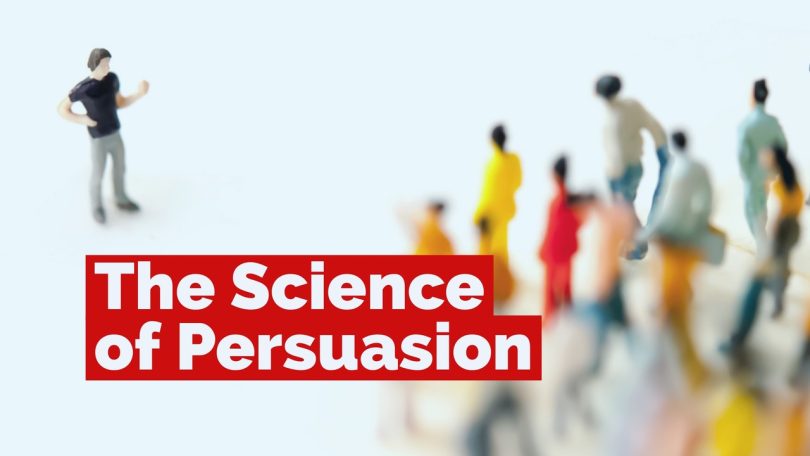

Sales is often described as an art, but modern research in psychology, behavioral economics, and neuroscience shows that it is equally a science. Persuasion is not random or purely dependent on personality. It follows predictable patterns based on how humans process information, evaluate risk, and make decisions under uncertainty.
In 2025, businesses that understand the science behind persuasion consistently outperform those that rely on intuition alone. Buyers are more informed, more skeptical, and more selective than ever before. This means that successful sales strategies must be built on evidence-based principles rather than outdated assumptions.
This becomes especially important in professional business environments where trust and compliance matter, such as industries supported by company secretarial services. In such contexts, credibility, transparency, and structured communication play a major role in influencing decision-makers. When governance is strong, persuasion becomes more effective because trust barriers are lower.
This article explores what scientific research reveals about persuasion in sales and how these insights can be applied in real business environments.
How the Human Brain Makes Buying Decisions
One of the most important discoveries in behavioral science is that human decision-making is not purely rational. Instead, it is a combination of fast emotional responses and slower logical reasoning.
Psychologist Daniel Kahneman’s research on System 1 and System 2 thinking shows that most purchasing decisions begin with intuitive emotional judgments and are later justified logically. This means that customers often decide how they feel about a product before they fully analyze it.
In real-world sales environments, this means emotional trust, clarity, and perception often matter more than technical details.
In industries supported by company secretarial services, where businesses expect professionalism and compliance, this dual decision process is even more visible. Clients often rely on initial trust signals before evaluating legal or operational details.
Understanding how the brain simplifies decisions is the foundation of persuasion.
Principle One: Reciprocity and Value Exchange
One of the most consistent findings in social psychology is the principle of reciprocity. When someone receives value, they feel a subconscious obligation to return it.
In sales, this means that offering something useful before asking for a sale increases conversion likelihood.
This could include educational content, free consultations, or insights that help potential clients solve a problem.
Research shows that reciprocity works because it activates social norms that encourage fairness and mutual exchange.
In professional service industries supported by company secretarial services, providing upfront value through guidance or compliance education builds stronger trust relationships with potential clients.
Value given first creates psychological momentum.
Principle Two: Social Proof and Behavioral Validation
Humans are deeply influenced by the behavior of others. When uncertain, people look at what others are doing to guide their own decisions.
This is known as social proof, and it is one of the strongest drivers of persuasion in sales research.
Testimonials, case studies, client lists, and user reviews all serve as signals that reduce perceived risk.
Studies show that people are significantly more likely to choose a product or service that appears widely accepted or recommended by others.
In industries involving company secretarial services, social proof is especially important because clients often prioritize reliability and reputation when selecting professional service providers.
People trust what others already trust.
Principle Three: Authority and Credibility Signals
Authority plays a major role in persuasion. People are more likely to follow recommendations from perceived experts or credible institutions.
Research in psychology shows that authority signals can significantly increase compliance and trust, even when people have limited information.
Authority is communicated through expertise, professional presentation, certifications, and clear communication.
Even small cues such as well-structured documentation or formal communication style can enhance perceived authority.
In fields supported by company secretarial services, authority is critical because clients expect regulatory knowledge, accuracy, and professionalism.
Authority reduces uncertainty and increases confidence.
Principle Four: Cognitive Fluency and Simplicity
Cognitive fluency refers to how easily the brain processes information. The easier something is to understand, the more trustworthy and appealing it feels.
Research shows that people prefer simple explanations over complex ones, even when complexity contains more detail.
This is because the brain conserves energy by favoring clarity.
In sales, this means that overly complicated messaging reduces conversion rates, while clear and structured communication improves outcomes.
In professional environments involving company secretarial services, clarity in explaining legal or compliance processes significantly improves client understanding and trust.
Simplicity enhances persuasion by reducing mental effort.
Principle Five: Scarcity and Perceived Value
Scarcity is a powerful psychological trigger that influences decision-making by increasing perceived value.
When something is limited in availability, people tend to value it more highly.
Research shows that scarcity works because it activates loss aversion, a cognitive bias where people fear losing opportunities more than they enjoy gaining them.
In sales environments, scarcity can be created through limited-time offers or capacity constraints.
In industries supported by company secretarial services, scarcity often appears in the form of limited consultation slots or regulatory deadlines, which naturally influence client urgency.
Scarcity increases motivation to act.
Principle Six: Commitment and Behavioral Consistency
Once individuals make a small commitment, they are more likely to follow through with larger related actions.
This principle is based on the human desire for consistency in behavior and identity.
Research shows that even small initial actions, such as signing up for information or attending a consultation, significantly increase the likelihood of conversion later.
This is widely used in sales funnels to gradually guide customers toward purchase decisions.
In professional service industries such as company secretarial services, initial engagement steps like document review or compliance assessment often serve as commitment triggers that lead to long-term client relationships.
Small actions shape larger decisions.
Principle Seven: Emotional Framing and Perception
How information is framed significantly influences how it is perceived.
Research in behavioral economics shows that people respond differently to the same information depending on whether it is presented in terms of gains or losses.
For example, emphasizing what a client might lose by not taking action can be more persuasive than highlighting potential gains.
Framing does not change facts, but it changes interpretation.
In industries involving company secretarial services, framing compliance risks or legal obligations clearly helps clients understand urgency and importance.
Perception often determines action more than logic.
Principle Eight: Trust Reduction and Risk Management
Trust is one of the most important factors in any sales decision. Customers constantly evaluate risk before committing to a purchase.
Research shows that reducing perceived risk is often more effective than increasing persuasive pressure.
Trust signals such as transparency, clear pricing, structured processes, and professional communication significantly reduce hesitation.
In professional environments involving company secretarial services, trust is particularly important because clients rely on accuracy, confidentiality, and compliance.
Reducing risk increases conversion probability.
Principle Nine: Emotional Resonance and Human Connection
While logic plays a role in decision-making, emotions are often the primary driver of choice.
People are more likely to buy from brands they feel emotionally connected to.
Research shows that storytelling, relatability, and authenticity significantly improve persuasion effectiveness.
Emotional resonance builds familiarity, which increases trust over time.
Even in structured industries such as company secretarial services, human connection through communication style and client interaction plays a critical role in long-term retention.
People buy based on emotion and justify with logic.
How These Principles Work Together
Persuasion is not the result of a single tactic. It is the combination of multiple psychological principles working together to shape decision-making.
Effective sales systems use reciprocity to create engagement, social proof to build trust, authority to establish credibility, simplicity to enhance understanding, and emotional framing to guide decisions.
Each principle reinforces the others, creating a seamless decision-making experience for the customer.
In industries supported by company secretarial services, combining these principles ensures that clients feel confident, informed, and secure throughout the decision process.
Persuasion is a system of interconnected psychological effects.
Ethical Use of Persuasion in Sales
Scientific persuasion should always be used ethically. The goal is not to manipulate customers but to help them make informed and beneficial decisions.
Ethical persuasion focuses on clarity, honesty, and value creation.
Short-term manipulation may increase sales temporarily, but it damages long-term trust and brand reputation.
Sustainable businesses prioritize transparency and customer well-being.
In professional industries such as company secretarial services, ethical communication is especially important because trust and compliance are foundational to long-term success.
Ethical persuasion builds sustainable growth.
Conclusion
The science of persuasion reveals that sales is not random or purely instinctive. It is driven by consistent psychological principles that influence how people perceive value, trust, and risk.
Research in behavioral science shows that reciprocity, social proof, authority, simplicity, scarcity, commitment, framing, and emotional connection all play critical roles in decision-making.
When applied correctly, these principles create a natural and effective sales process that aligns with how people actually think.
In industries supported by company secretarial services, where professionalism and trust are essential, understanding these principles is particularly valuable.
Persuasion is not about pressure. It is about understanding human behavior and designing experiences that guide better decisions.
FAQs
What is persuasion in sales?
Persuasion in sales is the use of psychological principles to influence buying decisions in an ethical and structured way.
Is sales persuasion manipulation?
No, ethical persuasion helps customers make informed decisions rather than forcing them to buy.
Why is social proof important in sales?
Social proof builds trust by showing that others have already used or approved a product or service.
What are company secretarial services?
Company secretarial services help businesses manage compliance, governance, and administrative legal responsibilities.
Why does simplicity matter in sales?
Simplicity improves understanding and reduces cognitive effort, increasing conversion likelihood.
How does scarcity influence buying behavior?
Scarcity increases urgency by making opportunities feel limited, which motivates faster decisions.
Can small businesses use persuasion techniques effectively?
Yes, small businesses can significantly improve sales using behavioral psychology principles.
Why is trust important in sales?
Trust reduces perceived risk and increases customer confidence in making a purchase.
You should also read: TechAiTech