
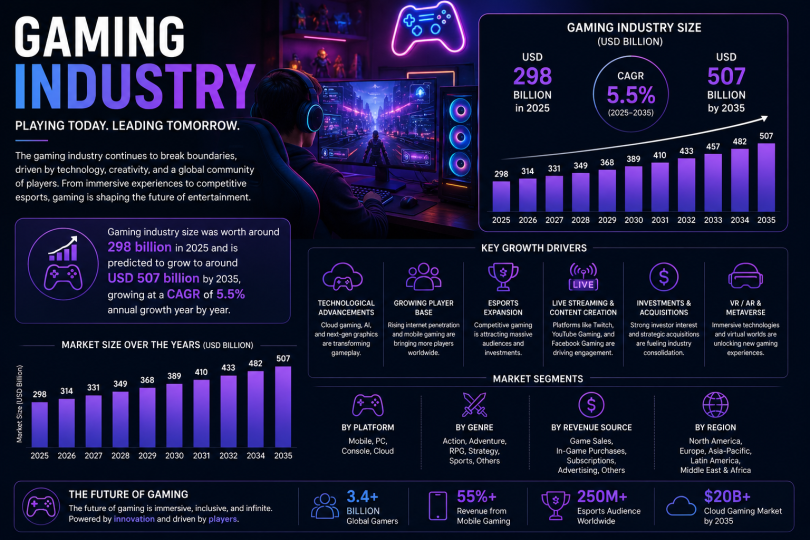

The competitive gaming industry has transformed from a niche hobby into a global entertainment powerhouse. Millions of players, fans, sponsors, and technology companies now contribute to a rapidly growing market that continues to evolve every year. What was once limited to local tournaments has expanded into international events that attract huge audiences across streaming platforms, social media networks, and digital broadcasting channels. As technology advances, competitive gaming markets are experiencing significant changes that affect players, organizations, investors, and consumers alike.
For technology-focused audiences, understanding these developments is important because gaming is closely connected to innovation. New hardware, cloud services, artificial intelligence, data analytics, and digital communication tools are reshaping how competitions are organized and consumed. These advancements are not only improving the player experience but are also creating new business opportunities across the broader technology ecosystem. As a result, competitive gaming continues to influence digital entertainment trends around the world.
The Rise of Advanced Gaming Technology
Technology remains one of the strongest forces driving growth in competitive gaming markets. Modern gaming hardware delivers faster processing speeds, improved graphics performance, and lower latency, allowing players to compete at higher skill levels. Gaming monitors with high refresh rates, responsive peripherals, and powerful processors have become essential tools for professional competitors seeking every possible advantage. These innovations continue to raise performance standards throughout the industry.
At the same time, software improvements have transformed the overall gaming experience. Game developers are investing heavily in optimization, anti-cheat systems, matchmaking algorithms, and network stability. Artificial intelligence is also being used to improve player training, game balancing, and performance analysis. As technology becomes more sophisticated, competitive gaming environments become more reliable, fair, and engaging for both participants and audiences.
Expansion of Esports Viewership and Media Coverage
One of the most important developments in competitive gaming markets is the rapid growth of esports audiences. Streaming platforms have made it easier than ever for fans to watch tournaments from anywhere in the world. Live broadcasts, highlights, interviews, and behind-the-scenes content help maintain strong engagement between major events. As internet access improves globally, more viewers are becoming part of the competitive gaming community.
Traditional media companies have also recognized the value of esports content. Television networks, digital publishers, and sports organizations increasingly cover major gaming events alongside conventional sporting competitions. This broader media exposure helps attract new audiences who may not have previously followed gaming. As viewership numbers continue to rise, advertisers and sponsors gain greater confidence in investing within competitive gaming markets, contributing to further industry growth.
Increased Investment from Brands and Sponsors
Corporate sponsorship has become a major source of revenue in competitive gaming. Global brands from industries such as technology, finance, telecommunications, energy drinks, and consumer products are investing heavily in esports teams, tournaments, and content creators. These partnerships provide financial support that allows organizations to improve player development programs, expand operations, and host larger events.
The growing interest from investors has also strengthened competitive gaming markets. Venture capital firms and private investors increasingly view gaming as a long-term growth sector with strong potential returns. Many organizations are building professional business structures similar to traditional sports franchises. This shift creates greater stability within the industry and encourages sustainable development across multiple areas, including talent management, event production, and digital marketing.
Growth of Mobile Gaming Competitions
Mobile gaming has emerged as one of the most influential segments within the competitive gaming landscape. Powerful smartphones and widespread internet access have enabled millions of players to participate in competitive experiences without needing expensive gaming equipment. Mobile esports tournaments now attract large audiences and substantial prize pools, especially in regions where mobile devices serve as the primary method of accessing digital entertainment.
The accessibility of mobile gaming has expanded the industry’s reach to new demographics and geographic markets. Developers are creating highly competitive mobile titles designed specifically for organized tournaments and professional play. As mobile technology continues to improve, the gap between traditional gaming platforms and mobile devices continues to narrow. This trend is expected to play a major role in shaping the future direction of competitive gaming markets worldwide.
Impact of Cloud Gaming and Digital Infrastructure
Cloud gaming technology is creating new opportunities throughout the gaming industry. Instead of relying solely on local hardware, players can access high-performance games through remote servers. This innovation reduces hardware limitations and allows more people to participate in competitive gaming regardless of their device specifications. As cloud infrastructure improves, the overall accessibility of gaming continues to increase.
Strong digital infrastructure is equally important for competitive gaming success. High-speed internet connections, advanced data centers, and reliable networking technologies help minimize latency and improve gameplay quality. Countries and regions investing in digital infrastructure often become attractive locations for esports tournaments and gaming businesses. These developments contribute to a more connected global gaming ecosystem where players can compete across borders with greater efficiency and consistency.
Data Analytics and Player Performance Optimization
Data analytics has become an essential component of modern competitive gaming. Professional teams use advanced statistical tools to evaluate player performance, identify weaknesses, and develop strategic improvements. Detailed performance tracking allows coaches and analysts to make informed decisions that can significantly impact tournament outcomes. This data-driven approach has introduced a new level of professionalism to the industry.
Beyond professional competition, analytics also benefit casual and aspiring players. Many gaming platforms now provide performance reports, skill assessments, and personalized recommendations that help users improve their gameplay. Artificial intelligence and machine learning technologies further enhance these systems by identifying patterns that may not be immediately visible to human observers. As analytical capabilities continue to evolve, they will play an increasingly important role in shaping competitive gaming strategies and development programs.
Regulatory Changes and Market Sustainability
As competitive gaming markets continue to expand, regulatory considerations are becoming more important. Tournament organizers, publishers, and governing bodies are working to establish standards that promote fairness, transparency, and player protection. Issues such as contract management, player welfare, competitive integrity, and anti-cheat enforcement require ongoing attention to maintain trust within the industry.
Long-term sustainability also depends on creating healthy business models that support players, teams, sponsors, and event organizers. Industry leaders are focusing on revenue diversification through merchandise sales, digital content, subscriptions, sponsorship agreements, and media rights partnerships. By developing stable financial foundations and responsible governance practices, competitive gaming markets can continue growing while maintaining credibility and professionalism in the eyes of global audiences and investors.
Conclusion
Competitive gaming markets are being shaped by a combination of technological innovation, expanding audiences, increased investment, mobile gaming growth, cloud infrastructure, data analytics, and evolving regulations. These developments are transforming gaming into one of the most influential sectors within the broader digital entertainment industry. As new technologies emerge and global participation increases, the opportunities for players, businesses, and technology companies will continue to expand.
For readers interested in technology and digital innovation, the gaming industry provides a clear example of how advancements can create entirely new markets and business ecosystems. Competitive gaming is no longer simply about playing games; it represents a complex network of technology, media, investment, and community engagement. Organizations that understand these industry developments will be better positioned to adapt to future trends and benefit from the ongoing evolution of the global gaming landscape.