
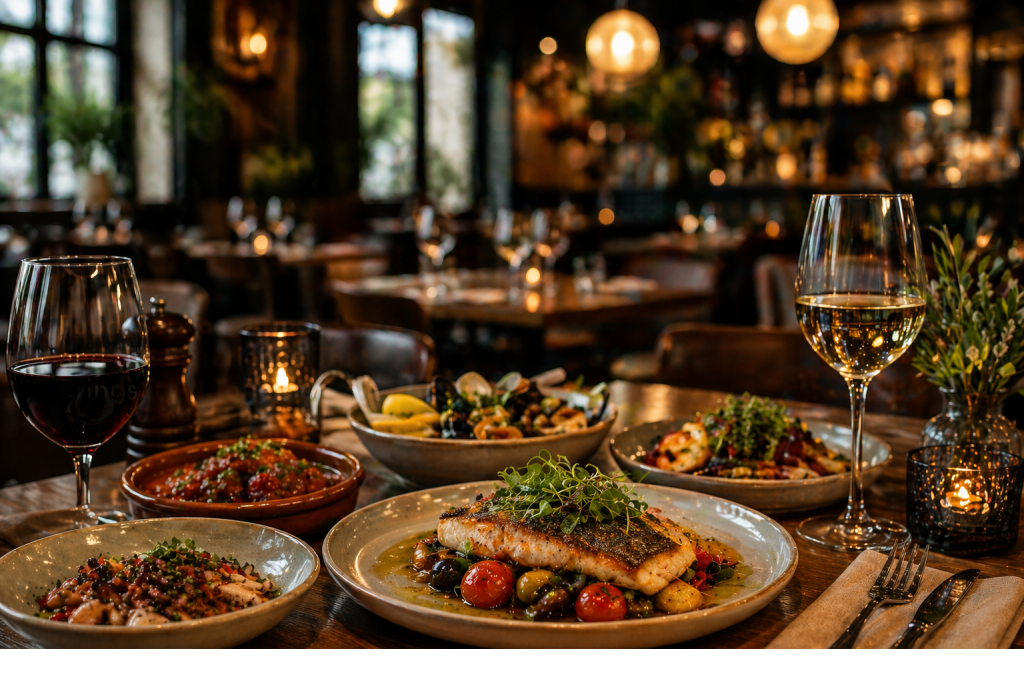
What actually makes a restaurant good? It sounds like a simple question. But the answer isn’t as obvious as star ratings or trending posts might suggest. A good restaurant isn’t just about great food-or fast service, or stylish interiors. It’s about how all those elements come together to create something that feels complete.
Think about the meals you remember. Not just the dishes, but the feeling. The ease of it. The way the room sounded. The moment the food arrived and everything just clicked.
That’s what we’re really unpacking here. Because understanding what makes a good restaurant isn’t about chasing perfection-it’s about recognising consistency, intention, and clarity of purpose.
It Starts With a Clear Identity
Every strong restaurant knows what it is-and sticks to it. That doesn’t mean it has to be niche or experimental. It just means there’s a clear idea behind it. A sense of direction.
You can feel it when you walk in, and you can taste it in the menu.
Take Santos + Co in Brewery Square as an example. If you’re searching for a Portuguese restaurant in the UK or somewhere that blends Portuguese cuisine with British ingredients, this is exactly the kind of place that works because it knows its foundation.
The menu leans into Portuguese culinary heritage-petiscos designed for sharing, seafood-led plates, and bold, balanced flavours-while drawing on locally sourced British produce.
It’s not trying to do everything. It’s doing something specific, and doing it well.
That clarity makes decision-making easier for diners. You’re not overwhelmed. You’re guided. And that’s often the first sign of a good restaurant-it doesn’t confuse you.
Good Food Is About Balance, Not Just Flavour
Let’s talk about the obvious one: food. Yes, it matters. But “good” food isn’t just about intensity or richness. It’s about balance.
A well-composed dish considers:
- Texture (crisp, soft, smooth)
- Acidity (brightness vs depth)
- Temperature (contrast or consistency)
- Portion size (satisfying without being heavy)
Interestingly, chefs often talk about restraint more than creativity. As legendary chef Massimo Bottura once put it, “Cooking is about emotion, balance, and harmony-not just technique.”
You see this in menus that don’t overload the plate. Where each ingredient has a reason to be there.
At Santos + Co, that shows up in dishes built for sharing-small plates that encourage variety without excess.
It’s thoughtful. It’s measured. And it keeps the focus on flavour rather than volume.
Service Shapes the Entire Experience
Here’s something people underestimate: service often defines whether a restaurant feels good or not.
You can have excellent food, but if the pacing is off, the mood shifts quickly.
Good service isn’t about formality. It’s about awareness.
Staff who:
- Read the table
- Adjust timing naturally
- Know the menu without sounding rehearsed
That’s what creates flow. The best service feels almost invisible-not because it’s absent, but because it’s seamless.
You don’t think about it. You just enjoy the evening.
And in today’s dining culture, where people move between quick meals and longer social dinners, that adaptability matters more than ever.
Atmosphere: The Silent Ingredient
Now imagine eating the same dish in two different rooms. One is loud, rushed, brightly lit. The other is warm, balanced, and easy to settle into.
Same food. Completely different experience.
That’s atmosphere.
It’s made up of small decisions:
- Lighting levels
- Music choice
- Table spacing
- Interior design
But together, they shape how you feel.
This is where Musica offers an interesting perspective. If you’re looking for a restaurant with live music in Bracknell or a casual dining and entertainment venue, Musica blends food with energy in a way that feels intentional.
The menu focuses on bold, comforting dishes-ideal for sharing or pairing with drinks-but the experience extends beyond the plate.
Live bands, DJs, and a rotating music line-up create a setting where food becomes part of a larger social moment.
And that’s key: a good restaurant doesn’t isolate food from environment. It integrates them.
Consistency Builds Trust
You might forgive one off night. But consistency is what keeps people coming back.
A good restaurant delivers the same standard-whether it’s a busy Saturday evening or a quieter weekday.
That doesn’t mean everything is identical. It means the experience feels reliable.
Consistency shows up in:
- Food quality
- Service timing
- Cleanliness
- Menu clarity
This is where many restaurants either build loyalty-or lose it.
Because diners don’t just remember great meals. They remember whether they can trust the place to deliver again.
Menu Design Matters More Than You Think
Ever opened a menu and felt stuck? Too many options. No clear direction. Everything sounding the same.
That’s usually a sign of weak curation.
Good menus guide you. They don’t overwhelm you.
You’ll often notice:
- A focused selection
- Clear categories
- Dishes that reflect the restaurant’s identity
There’s a historical reason for this. In classic French dining, prix fixe menus became popular because they simplified decisions while showcasing the kitchen’s strengths.
That principle still applies today.
Whether it’s small plates, sharing menus, or carefully structured sections, strong menus make dining easier-and better.
Speed and Reliability Still Matter
Let’s be practical for a moment. Not every meal is about ambience and storytelling.
Sometimes, you just want good food, delivered well, without complications.
That’s where operational strength comes in.
A good restaurant understands logistics:
- Efficient kitchen flow
- Clear ordering systems
- Reliable delivery or takeaway
For example, Iford Tandoori stands out if you’re searching for a reliable Indian takeaway in Bournemouth or a local tandoori restaurant with delivery.
It focuses on consistency, speed, and flavour-delivering dishes that arrive hot, well-prepared, and satisfying.
Not every dining experience needs to be elaborate.
Sometimes, quality shows up in reliability.
And that’s just as valuable.
Value Isn’t Just About Price
A good restaurant doesn’t have to be expensive. It just has to feel worth it.
Value comes from:
- Portion size vs price
- Ingredient quality
- Overall experience
A £15 meal that feels complete and satisfying can offer more value than a £50 meal that feels disjointed.
Diners aren’t just paying for food. They’re paying for time, comfort, and experience.
When those align, the price makes sense.
The Emotional Factor: Why Some Places Stay With You
Here’s the part that’s harder to measure.
Some restaurants stay with you. Not because they were perfect-but because they felt right.
Maybe it was the timing. Maybe the company. Maybe the way the staff handled a small detail that made a difference.
Psychologists often link this to emotional memory. Experiences tied to strong feelings-comfort, excitement, connection-tend to last longer.
Restaurants that understand this don’t just serve food. They create moments.
A Simple Way to Judge Any Restaurant
If you strip it all back, you can evaluate a restaurant with a few simple questions:
- Does it know what it’s trying to be?
- Does the food feel balanced and intentional?
- Does the service support the experience?
- Does the atmosphere match the menu?
- Would you go back?
If the answer is yes to most of these, you’ve likely found a good restaurant.
Final Thoughts: Good Restaurants Get the Basics Right-Then Build From There
Understanding what makes a good restaurant isn’t about chasing trends or perfection.
It’s about recognising the fundamentals-clarity, balance, consistency, and atmosphere-and seeing how they come together in real settings.
From a Portuguese-inspired dining experience at Santos + Co, to a live music restaurant in Bracknell like Musica, to a reliable Indian takeaway in Bournemouth at Iford Tandoori, the common thread isn’t style-it’s intention.
Each place knows what it offers. Each delivers on that promise in its own way.
And that’s what matters.
Because at the end of the day, a good restaurant doesn’t try to be everything. It focuses on doing a few things well-and making sure you leave satisfied, not just fed.
And when that happens, you don’t just remember the meal. You remember the place.