
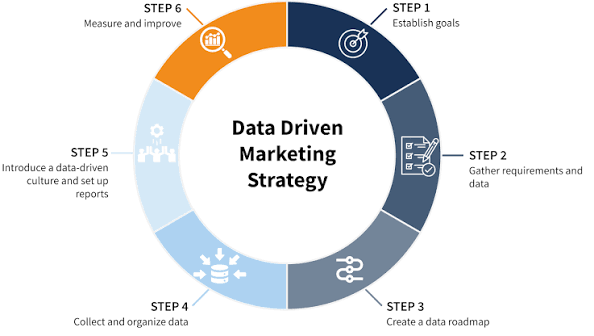

Businesses make decisions every day about pricing, marketing, product development, customer service, and expansion. Some decisions are routine, while others involve substantial investment and long-term consequences. In both cases, relying exclusively on intuition can lead to missed opportunities or unnecessary risks. Data-driven decision-making provides a more structured way to evaluate options, understand customer needs, and determine whether a business strategy is producing the intended results.
A market research platform helps organizations collect and organize consumer feedback so teams can use evidence when evaluating business choices. Depending on its capabilities, a platform may support audience targeting, survey distribution, fieldwork monitoring, data quality checks, and analysis. Businesses exploring research technology can review the information on purespectrum.com to understand how modern platforms can support consumer insights and more informed decisions.
What Data-Driven Decision-Making Means
Data-driven decision-making means using relevant evidence to evaluate a question before selecting a course of action. The evidence may include customer surveys, sales records, website analytics, customer support feedback, market reports, or product usage data.
The goal is not to replace human judgment with numbers. Instead, data gives decision-makers a clearer basis for comparing alternatives, identifying assumptions, and understanding uncertainty. Experienced managers still need to consider operational constraints, strategic priorities, and information that may not be captured in a dataset.
For example, a company considering a price increase might examine sales history, competitor prices, customer feedback, and willingness-to-pay research. Each source answers a different part of the question. Together, they can help the company estimate potential risks and identify pricing options worth testing.
A research platform can be especially valuable when the organization needs fresh feedback from a defined target audience. It provides a structured way to collect evidence rather than making a major decision based solely on informal opinions or isolated customer comments.
Define the Decision Before Collecting Data
An effective research project begins with a specific decision or problem. Collecting data without a clear purpose can generate large amounts of information that do not help the business move forward.
Before launching a study, teams should ask what they need to decide, which uncertainties are preventing a decision, and what evidence would make the available options easier to compare. These questions help determine the appropriate research method and audience.
Suppose a software company is considering adding a new feature to its product. The team might need to understand how frequently customers experience the problem, which user groups are most affected, and whether the proposed feature would influence purchase or renewal decisions.
Those questions lead to a more focused study than simply asking customers whether they like the idea. Researchers can develop questions that explore current behavior, unmet needs, expected benefits, and possible alternatives.
A clear objective also helps determine when the research is complete. The project should produce enough reliable information to address the decision, not merely maximize the number of responses collected.
Choose Relevant Data Sources
Different decisions require different kinds of evidence. Market research platforms commonly support survey-based research, but surveys are only one possible source of business information.
Internal data can reveal what customers have already done. Sales records may show which products sell well, while customer support logs can identify recurring complaints. Website analytics can highlight points where visitors abandon a process. Surveys can explore motivations, perceptions, and preferences that are not obvious from behavioral data alone.
Combining sources can produce a more complete understanding. For example, a company may discover that customers frequently stop before completing an online purchase. Analytics identify the stage where abandonment occurs, while survey research can investigate whether shipping costs, payment options, delivery timing, or trust concerns contribute to the problem.
Researchers should assess the relevance and reliability of each source. Internal data may reflect only existing customers, while a survey of prospective buyers may reveal barriers affecting people who never purchased. Using a source that matches the research question reduces the risk of drawing conclusions from incomplete evidence.
Target the Right Respondents
A dataset can be extensive yet unsuitable for the decision it is intended to support. If a business wants to understand the needs of a specialized customer group, responses from an unrelated audience may provide little practical value.
Audience targeting helps researchers recruit people with relevant characteristics or experiences. These characteristics may include geography, age, product ownership, purchasing behavior, occupation, or industry. Business-to-business studies may require respondents who participate in purchasing decisions or manage specific business functions.
Quotas can help researchers monitor the composition of the sample. If a company wants to compare several customer segments, it may establish target response counts for each group. The team can then monitor whether collection is progressing as planned.
However, quotas should not be confused with proof of representativeness. The suitability of a sample depends on the population, recruitment method, weighting approach where applicable, and the study’s intended conclusions.
Before collecting responses, researchers should confirm that the target audience can reasonably be reached and that the planned sample fits the decision. This helps avoid spending resources on data that cannot answer the business question.
Improve Data Quality Before Analysis
Data-driven decisions are only as dependable as the evidence supporting them. Duplicate respondents, automated responses, inattentive participants, unclear questions, and inconsistent collection methods can distort results.
Quality should be considered from the beginning of the project. Researchers should use clear screening criteria, neutral questions, and appropriate response options. They should check whether the survey is too long or confusing and test it before distributing it widely.
During fieldwork, monitoring can help identify unusual patterns, such as implausibly fast completions or inconsistent responses. Platform-level quality controls may support respondent verification and duplicate detection. These measures can reduce the burden of identifying potentially unreliable data.
After collection, researchers should review missing values, sample composition, response patterns, and any exclusions made during quality checks. They should document important decisions so that others can understand how the final dataset was prepared.
Quality procedures should be proportionate to the project. A low-stakes exploratory study may not require the same review process as research supporting a major investment. Nevertheless, every project benefits from clear methods and honest reporting of limitations.
Use Analytics to Identify Meaningful Patterns
Raw responses do not automatically provide a useful conclusion. Analysis helps organize the data and reveal patterns that relate to the original decision.
Basic reporting may include response distributions, average ratings, and comparisons between audience groups. Cross-tabulations can show how answers differ by location, age group, product usage, or another relevant characteristic. Visualizations can make these patterns easier to communicate to managers who do not work with research data every day.
Consider a company measuring satisfaction with a subscription service. The overall satisfaction score may appear stable, but analysis by subscription length could reveal that newer customers are less satisfied than long-term users. This pattern may suggest that onboarding, product expectations, or early support needs further investigation.
Researchers should avoid overinterpreting small differences or searching through many comparisons until an appealing result appears. The more comparisons a team performs, the greater the chance of finding a pattern that occurred by chance.
Good analysis combines appropriate statistical methods with business context. Findings should be described accurately, and recommendations should reflect both the strength of the evidence and the limitations of the study.
Monitor Research Progress in Real Time
Some research decisions must be made quickly. In those situations, visibility into ongoing data collection can help teams manage projects and respond to problems before they become serious.
Real-time monitoring may show response counts, completion rates, quota progress, and other fieldwork indicators. Researchers can use this information to identify groups that are difficult to recruit or detect when collection is progressing more slowly than expected.
For example, a business conducting a multi-region study may find that responses are arriving quickly in one country but slowly in another. The team can investigate whether targeting, survey access, timing, or audience availability is affecting progress.
Monitoring does not mean that preliminary data should be treated as a final answer. Early respondents may differ from later participants, and incomplete quotas can distort comparisons. Researchers should establish appropriate completion and quality criteria before making conclusions from the study.
Translate Findings Into Practical Recommendations
Research is most useful when it helps decision-makers determine what to do next. Reports should therefore connect findings to the original question and explain their practical implications.
A useful recommendation identifies the evidence, explains why it matters, and proposes an action that can be evaluated. For example, if customers consistently report difficulty understanding a product’s pricing, the company might test a clearer pricing page rather than immediately lowering its prices.
Recommendations should also distinguish between evidence and assumptions. A survey may show that customers prefer a certain feature, but it may not prove that building the feature will increase revenue. Additional analysis, cost estimates, or controlled testing may be required.
Prioritization is essential when research identifies several possible improvements. Teams can rank opportunities based on customer impact, strategic importance, implementation effort, and confidence in the evidence.
The purpose of research is not to eliminate every uncertainty. It is to reduce avoidable uncertainty enough to support a better decision.
Measure Results After Acting
A data-driven process does not end when management approves a recommendation. Businesses should evaluate whether the action produced the intended outcome.
Before implementation, teams should identify the measures that will indicate success. These may include conversion rates, customer satisfaction, repeat purchases, retention, awareness, or another outcome relevant to the original decision.
Where practical, companies can compare performance before and after the change or use an appropriate comparison group. They should also consider other factors that may have influenced the result, such as seasonal changes, competitor activity, or price movements.
Follow-up research can help explain why an initiative succeeded or failed. If a new message improves brand awareness but does not affect purchase intent, the company may need to investigate other barriers to conversion.
This cycle of research, action, and evaluation helps organizations learn continuously rather than treating each study as an isolated task.
Build a Responsible Research Culture
Tools alone cannot create an effective data-driven organization. Teams need to be willing to examine evidence, question assumptions, and acknowledge results that challenge their expectations.
Leaders should encourage employees to define decisions clearly and use appropriate evidence without expecting every research project to confirm an existing plan. Reports should explain uncertainty, and researchers should be able to communicate limitations without pressure to present stronger conclusions than the data supports.
Privacy and security also matter. Businesses should collect necessary information responsibly, protect access to research data, and follow applicable privacy requirements. Responsible practices support participant trust and help safeguard the organization’s reputation.
Conclusion
Market research tools can strengthen data-driven decision-making by helping businesses target relevant audiences, collect reliable feedback, monitor fieldwork, analyze results, and communicate findings. Their value depends on choosing an appropriate method and connecting the evidence to a clearly defined business decision.
Organizations should combine research data with operational knowledge, assess limitations honestly, and measure the results of actions taken. When this process becomes part of everyday business practice, teams can make more thoughtful choices, respond to customer needs, and improve their ability to adapt to changing markets.