
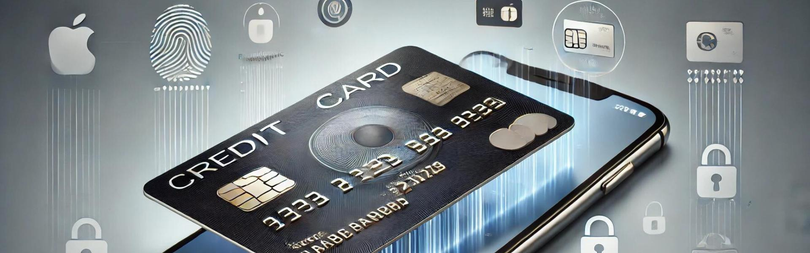

The financial industry is undergoing a major digital transformation. Credit cards, mobile wallets, online banking, virtual payment tools stash patrick , and automated fraud detection have changed how consumers manage money and complete transactions. At the same time, underground payment-card markets have demonstrated how stolen financial information can create serious risks for individuals and organizations.
StashPatrick is a name that may appear in discussions about illicit payment-card marketplaces. Examining this subject provides an stashpatrick.cc opportunity to understand the challenges facing the modern financial ecosystem without treating unauthorized card markets as legitimate financial services. The more important question is how the security lessons associated with underground markets can influence the future of digital credit-card services.
The Changing Digital Credit Card Landscape
Traditional credit cards were once primarily physical products used at retail locations. Today, many credit-card services are integrated into digital banking applications, mobile wallets, online shopping platforms, and subscription services.
Consumers can manage accounts from smartphones, receive transaction notifications, make contactless payments, and temporarily disable cards when suspicious activity occurs. Virtual cards can also provide additional separation between a customer’s primary account and online purchases.
These developments offer convenience, but they also create new security responsibilities. Every additional digital connection can become a potential target for fraudsters.
Understanding StashPatrick in Context
References to StashPatrick should be understood within the broader context of underground payment-card activity. Illicit marketplaces may be associated with the unauthorized distribution or exchange of compromised payment information.
Such environments differ fundamentally from legitimate financial services. A regulated credit-card provider has obligations relating to security, consumer protection, privacy, and financial regulation. Underground marketplaces have none of these legitimate safeguards.
The existence of these markets nevertheless provides useful information for cybersecurity professionals. They demonstrate the potential consequences when payment credentials are stolen and show why financial institutions must continually improve their defenses.
How Digital Payment Fraud Evolves
Cybercriminals constantly adapt their techniques as payment technology changes. Phishing campaigns may imitate financial institutions, attackers may distribute malicious software, and compromised websites can expose customer information.
Social engineering is another important threat. Criminals may attempt to convince consumers or employees to disclose passwords, verification codes, or other sensitive information.
As digital payments become more popular, attackers are likely to focus increasingly on the accounts, devices, applications, and services that support those payments.
This means future credit-card security will need to address more than the physical card itself.
The Rise of Virtual Credit Cards
Virtual credit cards represent one important development in digital payment security. Depending on the provider, virtual cards may use separate numbers or temporary credentials for online transactions.
This can reduce the exposure of a customer’s primary card information. If a virtual credential is compromised, the underlying account may have an additional layer of separation.
However, virtual cards are not a complete solution. Users still need strong account security, reliable authentication, and awareness of phishing attempts.
Artificial Intelligence and Fraud Detection
Artificial intelligence is becoming increasingly important in financial security.
Banks and payment providers can analyze transaction patterns to identify unusual behavior. For example, a transaction that differs significantly from a customer’s normal spending behavior may receive additional scrutiny.
Machine-learning systems can evaluate large amounts of transaction data much faster than traditional manual processes. As these systems improve, financial institutions may become better at detecting suspicious activity before fraudulent transactions cause significant losses.
At the same time, attackers may also use automation and artificial intelligence to make scams more convincing. This creates an ongoing technological competition between fraud prevention and fraud generation.
Stronger Authentication for Digital Payments
Authentication will remain central to the future of credit-card services.
Passwords alone can be vulnerable to phishing, credential theft, and password reuse. Multi-factor authentication provides an additional layer by requiring users to prove their identity through another method.
Biometric authentication, passkeys, device-based verification, and risk-based authentication are among the technologies that can improve account security.
The future will likely involve authentication systems that operate more seamlessly in the background while still providing strong protection against unauthorized access.
Tokenization and Payment Security
Tokenization is another important development. Instead of repeatedly transmitting a customer’s actual card number, payment systems can use a substitute token for certain transactions.
This approach can reduce the value of stolen payment information because the token may be limited to a particular device, merchant, or payment environment.
Tokenization demonstrates an important security principle: sensitive information should be exposed as little as possible. Reducing the number of places where actual payment credentials are stored or transmitted can reduce opportunities for attackers.
The Importance of Consumer Awareness
Technology cannot eliminate every financial-security risk. Consumers remain an important part of the security ecosystem.
People should be cautious about unexpected emails, text messages, and phone calls requesting payment information or authentication codes. Official financial institutions generally provide established channels for account management, and consumers should use those channels rather than clicking suspicious links.
Strong, unique passwords and multi-factor authentication should be used for financial accounts whenever available. Consumers should also keep mobile devices and applications updated to reduce exposure to known vulnerabilities.
Regular account monitoring provides another layer of protection. Transaction alerts can help users identify suspicious activity quickly.
What Businesses Can Learn
Businesses that process payment information have an important responsibility to protect customer data.
Organizations should limit access to sensitive information according to job requirements. Encryption, network segmentation, vulnerability management, secure application development, endpoint security, and continuous monitoring can all contribute to stronger defenses.
Companies should also carefully evaluate third-party providers. Payment processors, cloud platforms, software vendors, and other partners can introduce additional risks if their security practices are inadequate.
Security should therefore be considered across the entire digital supply chain.
Regulatory and Industry Developments
The future of digital credit-card services will also be influenced by financial regulations and industry standards.
Governments and payment organizations continue to develop requirements for protecting consumer information, reducing fraud, and improving authentication. These requirements can encourage financial institutions and merchants to adopt stronger security practices.
International cooperation may also become increasingly important because digital payment fraud frequently crosses national borders.
Effective regulation can help establish minimum security expectations while encouraging innovation within the legitimate financial sector.
The Future of Digital Credit Cards
Looking ahead, credit-card services are likely to become increasingly integrated with mobile devices and digital wallets. Physical cards will remain important, but digital credentials, tokenized transactions, biometric authentication, and automated fraud detection will continue expanding.
Consumers may eventually interact less with traditional card numbers and more with secure digital identities and payment tokens.
This could make payment systems both more convenient and more secure. However, the transition will require continued investment in cybersecurity and consumer education.
Conclusion
Exploring StashPatrick within the broader context of underground payment-card markets highlights an important reality: financial innovation and cybersecurity must develop together.
Illicit card markets demonstrate what can happen when payment information falls into unauthorized hands. The lesson for the legitimate financial industry is to minimize exposure, improve authentication, strengthen fraud detection, and give consumers better tools for protecting their accounts.
The future of digital credit-card services will likely involve virtual cards, tokenization, artificial intelligence, biometric authentication, and increasingly sophisticated fraud-monitoring systems. These technologies can create a safer payment environment when implemented responsibly.
Ultimately, the strongest digital financial ecosystem will not simply prioritize convenience. It will combine convenience with privacy, transparency, resilience, and security. As payment technology continues to evolve, those principles will remain essential for protecting consumers and maintaining trust in digital finance.